Category: Green Cards

  • What Does it Mean to Sponsor Someone for a Green Card?

    If you’re like many people, you know that it’s possible for an American citizen or lawful permanent resident to sponsor an immigrant to come to the United States. But what, exactly, does it mean to be a sponsor, and how does it all work? This guide explains.

    What is a Green Card Sponsor in Family Immigration?

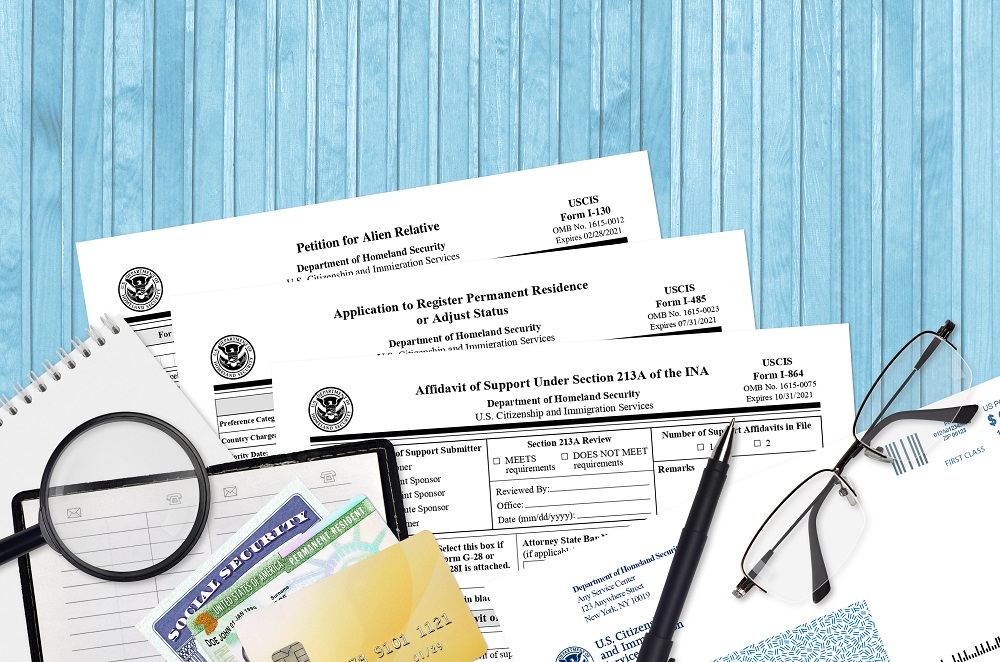
    A green card sponsor is someone who helps an immigrant become a lawful permanent resident in the United States. The sponsor does this by signing Form I-864, Affidavit of Support. This form is essentially a contract that says the person who signs it agrees to use their financial resources to support the person named on the affidavit if necessary.

    Anyone who applies to become a permanent resident through a family member needs a financial sponsor. U.S. Citizenship and Immigration Services (USCIS) requires Form I-864 as part of a complete application. Without it, USCIS will deny the application.

    Note that sponsoring someone for family immigration is different from sponsoring an employee to work for your company. Business immigration is a separate process and requires an employer to perform several steps before being eligible to sponsor a worker. (This guide only addresses family immigration.) The one exception is when an immigrant is coming to the U.S. to work for a relative, or for a company that a relative owns a certain share in. If this sounds like your situation, you should speak to a New York immigration attorney about the requirements you and your family member must meet.

    Related: Can undocumented immigrants get legal status in the United States?

    Who’s Eligible to Sponsor Someone for a Green Card in the United States?

    To sponsor an immigrant, you must be a U.S. citizen or lawful permanent resident who’s at least 18 years old. You must also be currently living in the United States or one of its territories or possessions at the time you file an Affidavit of Support.

    The sponsor is usually the person whose relationship qualifies the immigrant for lawful permanent residency in the United States. For example, a spouse may sponsor their partner; a parent may sponsor their child. In some cases, a child may sponsor their parent, or someone may sponsor a sibling.

    Who Can U.S. Citizens Sponsor?

    U.S. citizens may sponsor the following family members:

    • A spouse
    • An unmarried child under the age of 21
    • A parent (if the citizen is over the age of 21)
    • A married child of any age
    • A sibling (if the citizen is over the age of 21)

    Who Can Lawful Permanent Residents Sponsor?

    Lawful permanent residents may sponsor the following family members:

    • A spouse
    • An unmarried child under the age of 21
    • An unmarried stepchild under the age of 21

    Related: The step-by-step guide to removing conditions from a green card

    Can You Sponsor More Than One Person?

    You may sponsor more than one person. However, you will need to complete a separate petition and Affidavit of Support for each person you wish to sponsor. You also need to prove that you can financially support each immigrant you sponsor.
    Affidavit of Support for Green Card Sponsors - NY Immigration Attorney

    The Affidavit of Support for Green Card Sponsors

    An Affidavit of Support helps ensure that new immigrants to the United States aren’t living in poverty. Unfortunately, sometimes people come to the U.S. without adequate money to live on – and that’s where the sponsor comes in. The sponsor signs a legally binding affidavit that says they agree to provide for the immigrant if necessary; that helps prevent new immigrants from being forced to rely on some types of public assistance programs. If the immigrant uses certain forms of public assistance, the sponsor is required to repay the government for the assistance the immigrant uses.

    Generally, you must make at least 125 percent of the Federal Poverty Guidelines, which change every year, to qualify as a sponsor. There’s an exception, though: If the sponsor is an active-duty military member in the U.S. armed forces and the immigrant is a spouse or child, the income requirement is 100 percent of the poverty level.

    If you don’t make at least that amount, you may need a joint sponsor.

    What is a Joint Sponsor?

    Sometimes it’s necessary to use a joint sponsor – a second person who agrees to provide financial support to an immigrant who’s applying for a family-based green card. This person doesn’t have to be related to the primary sponsor or the immigrant; it can be a friend rather than a family member.

    A joint sponsor may be necessary if you (the primary sponsor) don’t have enough income or assets to guarantee that you’re able to support the immigrant. You may also need a joint sponsor if your tax returns don’t accurately reflect how much you make now, even if you currently make enough. That’s because USCIS will look at your tax returns as proof of your income.

    The primary sponsor and the joint sponsor must both fill out and file an Affidavit of Support.

    Related: What are immigration fraud and willful misrepresentation?

    Who's Eligible to Sponsor Someone for a Green Card in the U.S.

    What Are Your Responsibilities if You Sponsor Someone for a Green Card?

    A green card sponsor’s responsibilities are simple: They must provide financial support for an immigrant if it becomes necessary. Naturally, if the immigrant can provide for themselves, the sponsor doesn’t have to provide financial support.

    How Long Does Sponsorship Last?

    A sponsor’s financial responsibility automatically ends when the person they sponsored becomes a U.S. citizen. If the immigrant doesn’t become a U.S. citizen, the sponsor’s financial responsibility ends when the immigrant is credited with 40 quarters of work in the U.S. (which usually happens if the immigrant is continuously employed for 10 years), leaves the U.S. permanently, or passes away.

    What is the Process for Sponsoring an Immigrant?

    The first step in sponsoring an immigrant is usually filing a petition with USCIS. The specific forms you need to file depends on your relationship to the person you’re sponsoring. Your immigration attorney will know exactly which forms you need to file, as well as what types of supporting documentation you need to send in with your petition.

    Sponsoring an Immigrant Who Already Lives in the United States

    The process for sponsoring an immigrant who already lives in the United States is a little different. In this case, you need to file Form I-485, Application to Register Permanent Residence or Adjust Status, along with the other required documents. The immigrant must then attend an interview at a USCIS office.

    Sponsoring an Immigrant Who Lives Outside the United States

    If the immigrant you want to sponsor lives outside the United States, you will need to go through the National Visa Center (NVC) process. The first step is to file Form I-130, Petition for Alien Relative. After that’s approved, the NVC will send you information and instructions on how to submit the Affidavit of Support and pay the visa processing fee. From there, the immigrant will need to attend an interview at the nearest U.S. embassy or consulate.

    What Supporting Documents Do You Need to Sponsor an Immigrant?

    There are a few different supporting documents that you may need to submit (in addition to your Affidavit of Support) when sponsoring an immigrant. These include:

    • Proof of your U.S. citizenship or lawful permanent resident status
    • Proof of your relationship to the immigrant
    • Evidence of your financial ability to support the immigrant
    • A medical examination
    • A police certificate (if required)

    You may also need to submit other documents, depending on your individual circumstances. But don’t worry – your immigration attorney will tell you exactly what you need for your petition.

    How Much Does it Cost to Sponsor a Family Member - Affidavits of Support

    How Much Does it Cost to Sponsor a Family Member?

    There are a few different fees associated with sponsoring a family member for a green card. The first is the filing fee for the petition, which is subject to change (but you can find the current fee here). You may also have to pay a biometrics fee and a fee for the Affidavit of Support.

    How Long Does it Take to Sponsor an Immigrant?

    The amount of time it takes to sponsor an immigrant depends on a few different factors. These include:

    • The relationship between the sponsor and the immigrant
    • The immigrant’s country of origin
    • Whether the immigrant is already in the United States

    Generally speaking, it takes longer to sponsor an immigrant who is not a close relative and who lives outside the United States. The entire process can take several months (or longer), so it’s best if you talk to an immigration attorney about your specific situation. Your attorney can discuss how long your case is likely to take and when your relative may be able to come to the United States.

    Related: Can you get a green card with a criminal record?

    What if the Person I’m Sponsoring Gets a Green Card Based on Employment?

    If the immigrant you sponsored gets a green card based on employment rather than a family relationship, you are not responsible for them financially. The employer is responsible for making sure that the immigrant can support themselves.

    However, even if you’re not financially responsible for an employed immigrant, you may still be considered their sponsor. That’s because you were the one who originally petitioned for them to come to the United States. As such, you may be asked about your sponsorship during the immigrant’s green card interview.

    Do You Need to Talk to an Immigration Attorney About Sponsoring Someone for a Green Card?

    If you need to talk to an immigration attorney, we may be able to help you. Call our office at 914-481-8822 to schedule a consultation with an experienced, knowledgeable immigration attorney who can answer your questions and give you the legal advice you need.


  • The Step-by-Step Guide for Removing Conditions on Your Green Card

    When you get a green card through marriage, it comes with conditions attached – namely, you must remain married to the same person for at least two years before you can apply for a permanent green card. But how do you remove conditions on a green card through marriage, and what happens if you don’t? This guide explains.

    Conditional Green Cards: What You Need to Know

    Most people who receive a green card through marriage get a conditional green card (though not everyone does; see the following section for more information on who gets a conditional green card and who doesn’t).

    You must remove the conditions on your green card before you can receive a permanent one. Many people choose to work with a Port Chester immigration attorney to remove the conditions from their green cards.

    Who Gets a Conditional Green Card, and Who Gets One Without Conditions?

    You receive a conditional green card if you marry a U.S. citizen or lawful permanent resident (under certain circumstances) or if you’re a businessperson who got a green card to invest in a U.S. business.

    Conditions for Green Card Through Marriage

    If your marriage is less than two years old at the time you arrive in the U.S. or at the time U.S. Citizenship and Immigration Services (USCIS) approves you for a green card, you get conditional residency – you have a conditional green card.

    However, if you’ve been married longer than two years, you don’t need a conditional green card. You’ll receive permanent residency with no conditions attached.

    Conditions for Investor Green Cards

    Investors who qualify for a green card through the EB-5 Investor Program receive a conditional green card. If you participated in the EB-5 program, you must remove the conditions before your green card becomes permanent.

    Note: Permanent residency doesn’t expire, but you will need to replace your green card every ten years. When you replace it, you don’t need to reapply or change your status in any way – you simply need a new card.

    What_is_Adjustment_of_Status_-_NY_Immigration_Lawyer

    What is Adjustment of Status?

    Adjustment of status is the process you must go through when you want to obtain a green card. For example, if you’re in the U.S. on a fiancé visa when you marry your spouse, you need to adjust your status to conditional resident. In fact, any time you apply for a green card from within the U.S., you need to adjust your status – even if you married outside the country and travel to the United States to live. That’s because initially, you enter the United States on a visa; you need to adjust your status from visa-holder to conditional resident or permanent resident.

    (If you’re currently outside the U.S. and apply for a green card, you don’t need to adjust your status. You simply need to apply for a green card.)

    The_Step-by-Step_Guide_to_Removing_Conditions_on_Your_Green_Card_-_New_York_State_Immigration_Lawyer

    The Step-by-Step Guide to Removing Conditions on Your Green Card

    Many people choose to work with a Port Chester immigration attorney to remove the conditions on their green cards. That’s because the process requires a pretty significant amount of paperwork – and because in order to successfully remove the conditions on a green card, you must show USCIS that you held up your end of the bargain.

    The requirements you must meet (and prove to USCIS that you met) depend on whether you received a green card based on your marriage to a U.S. citizen or lawful permanent resident, or you received it based on your investment in a U.S. business.

    In other words, it’s your responsibility to prove to the U.S. government that you didn’t only marry your spouse to get an immigration benefit. You must also fill out and file the appropriate paperwork and provide supporting documentation.

    Related: Can you get a green card with a criminal record?

    Steps to Removing Conditions if You Received a Green Card Through Marriage

    If you received a green card through marriage, you must petition USCIS to remove the conditions within 90 days of your two-year green card anniversary. Your two-year green card anniversary is exactly two years after the government gave you conditional resident status.  These are the steps to removing conditions from your green card through marriage:

    1. Ensure that you’re eligible.
    2. Determine whether you need a waiver to file a petition without your spouse.
    3. Fill out and file Form I-751 with USCIS.
    4. Attend your interview.

    Here’s a closer look at each.

    Step #1 to Removing Conditions From a Green Card Through Marriage: Check Eligibility

    Typically, you’re only eligible to remove the conditions on permanent residence if you’re still married to the same U.S. resident or lawful permanent resident. (If you have a conditional green card based on a parent’s marriage, your parent must still be married to the same person.)

    Step #2 to Removing Conditions From a Green Card Through Marriage: Apply for a Waiver, if Necessary

    If you’re not still married to the same person you were married to when you initially applied for your green card, you may be eligible for a waiver. Generally, you may get a waiver if your spouse (or stepparent) is or was a U.S. citizen or lawful permanent resident and:

    • They are now deceased and you (or your parent) entered the marriage in good faith
    • You married in good faith but your (or your parent’s) marriage ended through divorce or you had it annulled
    • You married in good faith, but you or your child were subjected to extreme cruelty or were battered by your spouse (through the VAWA provision)
    • If your removal from the U.S. Would result in extreme hardship

    If you believe you qualify for a waiver, your immigration attorney can help you apply for one.

    Related: How long do you have to wait for a U visa?

    Step #3 to Removing Conditions From a Green Card Through Marriage: Fill Out and File the Paperwork

    In order to remove the conditions on your green card, you must file Form I-751 with USCIS. Your immigration attorney can fill out and file this petition for you.

    Step #4 to Removing Conditions From a Green Card Through Marriage: Attend Your Interview

    Most people have to participate in an interview with a USCIS official to remove the conditions from their green cards. Your attorney can advise you on what to expect during your interview, as well as go over your petition with you to ensure you’re familiar with all the answers you initially provided. During your interview, the USCIS official will review your petition and may ask you additional questions to determine whether your marriage is legitimate.

    Related: What happens in an immigration interview?

    Steps to Removing Conditions if You Received a Green Card Through the EB-5 Investor Program

    If you received a conditional green card because you’re an investor who agreed to invest a certain amount of capital in a United States company, your process for removal of conditions looks like this:

    1. Fill out and file Form I-829 with supporting evidence.
    2. Extend your conditional permanent residence, if necessary.

    Here’s a closer look at each.

    Step #1 to Removing Conditions From an Investor Green Card: File Your Paperwork and Supporting Documentation

    The first step in removing conditions from an investor green card is to file Form I-829 with USCIS. Your attorney can fill out and file this form for you.

    You need to include supporting documentation with this form, including evidence that you:

    • Made the investment or are actively in the process of investing the required amount of capital in a U.S. company
    • Sustained the investment throughout the whole period of your conditional residence
    • Created at least ten full-time positions

    Supporting documentation may include things like bank statements, invoices and receipts, business licenses, contracts, and federal or state income tax returns or quarterly tax statements. If you’re not sure what type of documentation to include, your attorney can give you additional guidance.

    Step #2 to Removing Conditions From an Investor Green Card: Extend Your Conditional Permanent Residence

    Sometimes it takes USCIS a while to process Form I-829, but you may be able to extend your conditional permanent residence status while the form is pending. Your attorney can help you with your extension if you need one. After you receive Form I-797 from USCIS, which tells you that the agency has received your petition, you may also be eligible for an Alien Documentation, Identification and Telecommunication (ADIT) stamp in your passport – and that enables you to travel outside the U.S. (if necessary).

    FAQ_on_Removing_Conditions_From_a_Green_Card_-_NY_Immigration_Lawyer

    FAQ on Removing Conditions From a Green Card

    Check out these commonly asked questions about removal of conditions. If you don’t see the answer you need here, please feel free to call our office at 914-481-8822 for a consultation; we can give you the guidance you need.

    Do You Only Need to Remove Conditions Once?

    You only need to remove the conditions on your green card one time. After you have removed the conditions, you receive a permanent green card and are no longer a conditional permanent resident. You do, however, need to renew your permanent green card every ten years. But don’t worry – even if you don’t renew your card, you’re still a lawful permanent resident. Your status doesn’t expire; only your card does.

    Can You Renew a Conditional Green Card?

    You can’t renew a conditional green card. You can only remove conditions from it, which turns it into a permanent green card.

    Can You Remove Conditions if Your Spouse Doesn’t Want You To?

    It is possible to remove the conditions from your green card if your spouse doesn’t want you to. However, you’ll need a waiver from USCIS. Your attorney can help you get this waiver if you qualify for it.

    When Do You Have to Remove Conditions on Your Green Card?

    You must remove the conditions on your green card within 90 days of your two-year green card anniversary.

    What Happens if You Don’t Remove Conditions on Your Green Card?

    If you fail to remove the conditions on your green card, your lawful permanent resident status expires. At that point, you can be deported from the United States.

    Related: The complete guide to removal from the United States

    Do You Need to Remove Conditions if You’ve Been Married Longer Than Two Years?

    If you were married longer than two years when you petitioned for your original green card, you won’t have a conditional green card. That means you don’t have to apply to remove any conditions – there aren’t any to remove.

    Do You Need to Talk to an Immigration Attorney About Removing Conditions on Your Green Card?

    If you need to talk to an immigration attorney, we may be able to help you. Call our office at 914-481-8822 to schedule a consultation with an experienced, knowledgeable immigration attorney who can answer your questions and give you the legal advice you need.
  • Can Undocumented Immigrants Get Legal Status in the U.S.?

    Can Undocumented Immigrants Get Legal Status in the U.S.?

    There are currently around 11.4 million undocumented immigrants in the United States, and most of these people don’t have a clear path to lawful permanent residency or citizenship. Unfortunately, if you’re in the U.S. without the proper documentation, it can be incredibly difficult to gain legal status here. However, you may have a few options, which this guide explains.

    What Does ‘Undocumented Immigrant’ Mean?

    An undocumented immigrant is a person from another country – any other country – who doesn’t have the lawful right to be (or remain) in the United States. For example, people who were born in the U.S. have a natural-born lawful right to live in the U.S.; so do most people with a U.S. citizen parent. Some people who have a lawful permanent resident parent have the lawful right to be or remain in the United States, too.

    But outside those groups, most people who weren’t born in the United States need prior authorization before entering the country. Even with prior authorization to enter the U.S., most foreign-born people need authorization to work, study or live in the United States. Even vacationers need the appropriate documentation to travel around the country.

    People who don’t have the natural-born right to remain in the U.S. or who don’t have the appropriate documentation are considered undocumented immigrants.

    Undocumented Immigrants Who Lawfully Entered the United States

    It’s important to note that the term undocumented immigrants applies to any person who doesn’t have the appropriate documentation to remain in the United States – not only to people who entered the country unlawfully. In fact, somewhere around half of all undocumented immigrants entered the U.S. lawfully but overstayed their visas. (When you have a visa to enter the United States, it’s typically only good for a specific period of time period you must leave the country by the time your visa expires.)

    U.S. Immigration Law on Undocumented Immigrants

    U.S. immigration law is very strict when it comes to undocumented immigrants (though not as strict as some countries are). Often, people found to be in violation of U.S. immigration law are removed from the country, and many are prohibited from returning for a certain period of time.

    There are a few ways people who are in the United States unlawfully may get legal status without leaving and coming back with proper authorization. However, these are the exceptions, not the rules. That means if you’re currently in the United States unlawfully, your best chance to get lawful status is to leave, apply to come back, and wait for a decision from USCIS. You may wish to speak to an immigration attorney who can give you the guidance you need. But in the meantime, the following sections outline the few options undocumented immigrants have for gaining legal status in the United States.

    Asylum

    U.S. immigration law allows some people to apply for asylum. Essentially, asylum is protection; people who are granted asylum in the United States are allowed to live and work here so they don’t have to return to their home countries.

    Asylum is only available in certain circumstances, though. The United States government will only grant you asylum if you’ve been persecuted or are in danger of persecution in your home country based on one of the following five factors:

    • Religion
    • Race
    • Nationality
    • Political opinion
    • Membership in a particular group

    The U.S. government’s definition of persecution is fairly narrow and includes things like physical violence or torture, violations of human rights (such as genocide, slavery, or forced abortion or sterilization), threats of harm and unlawful detention. It also includes the infliction of mental, emotional or psychological harm, as well as economic discrimination or harm and a few other types of discrimination and harassment.

    The persecutor is important, too. If you’re seeking asylum in the U.S., you must show that the persecution came from your country’s government or groups that the government is unable to control (such as guerillas, tribes or organized vigilante groups). In some cases, you may also be able to seek asylum in the U.S. if you’ve been the victim of domestic violence in a country that won’t (or can’t) protect you.

    You may apply for asylum in the United States when you’re at a border crossing or within a year of your arrival in the country (or within a year of your visa’s expiration date). You may even apply for asylum if you entered the U.S. unlawfully. For example, if you entered the U.S. on March 15 (or your visa expired on March 15) of this year, you have until March 15 next year to apply for asylum.

    Related: All about immigration interviews

    Temporary Protected Status

    Temporary protected status, or TPS, is available to people whose home country has recently been through an environmental or natural disaster, a civil war or other circumstances that makes returning dangerous. This humanitarian program is only available to people from certain countries (those that have had a recent disaster, war or special circumstances), and the list of countries is subject to change.

    To be eligible for TPS, you must be a national of one of those countries (or a person with no nationality who last resided in one of those countries). You must also file during a specific time period, and have been continuously residing in the United States since the date specified for your country.

    TPS may not be available to you if you:

    • Have been convicted of a felony, or if you’ve been convicted of two or more misdemeanors, in the United States
    • Are inadmissible to the United States
    • Are barred from asylum, such as persecuting another person or inciting terrorism
    • Haven’t been continuously present in the U.S. for the required amount of time

    If USCIS grants you temporary protected status, you may be able to re-register to maintain your benefits. That applies to all beneficiaries, whether USCIS, an immigration judge, or the Board of Immigration Appeals (BIA) granted your TPS status.

    Related: When do you take the U.S. citizenship test?

    DACA

    Deferred Action for Childhood Arrivals (DACA) is a U.S. government policy that may allow you to request deferred action on removal. Plainly speaking, DACA may enable you to stay in the United States, even if you entered the country unlawfully – but only if you:

    • Were under the age of 31 on June 15, 2012
    • Arrived in the U.S. before you turned 16 years old
    • Have resided in the U.S. since June 15, 2007 through today
    • Were present in the U.S. on June 15, 2012 and are present at the time you petition USCIS for DACA benefits
    • Did not have a lawful status on June 15, 2012
    • Are in school, have graduated from school or have a certificate of completion from high school, or have obtained a general education development (GED) certificate, or are a veteran of the armed forces (including the Army, Navy, Marines, Air Force, Coast Guard or Space Force) of the United States
    • Have never been convicted of a felony, significant misdemeanor, or three or more other misdemeanors, and you’re not a threat to public safety or national security

    You may request DACA even if you’re in removal proceedings, have a final removal order, or have a voluntary departure order, as long as you’re not in immigration detention at the time you file your request. If you’re requesting DACA for the first time, you may want to speak to an attorney about your situation; your immigration lawyer can answer your questions and help ensure that DACA is the right path forward for you (and if there’s a better solution, she’ll let you know).

    Related: Getting a green card with a criminal record

    Undocumented Veterans of the U.S. Armed Forces

    If you served in the U.S. armed forces, including the Army, Navy, Marine Corps, Air Force, Coast Guard or Space Force, you may be eligible to stay in the United States even if an immigration judge finds that you’re unlawfully present here. However, you’re only eligible to stay based on your prior service if you were honorably discharged and you served between the following dates in one of the following conflicts:

    • June 25, 1950 to July 1, 1955 in the Korean War
    • February 28, 1961 to October 15, 1978 in the Vietnam War
    • August 12, 1990 to April 11, 1991 in the Persian Gulf War
    • September 11, 2001 to the present in Operation Enduring Freedom

    You may be eligible even if you didn’t deploy. You should speak to an immigration attorney about your situation; your lawyer can help you file the appropriate petitions to remain in the United States.

    Can You Get Married to a U.S. Citizen to Avoid Deportation if You’re Undocumented?

    Marrying a U.S. citizen or lawful permanent resident (green card-holder) won’t solve your problems if an immigration judge orders you to leave the United States. In fact, doing so will likely result in your removal from the country – and you may even be barred from coming back for a certain period of time.

    Related: How to get a green card through marriage

    What Happens if the Government Finds Out That You’re Undocumented?

    Typically when the U.S. government finds out that a person is undocumented, the person may be arrested by Immigration and Customs Enforcement (ICE). As a division of the Department of Homeland Security (DHS), ICE is tasked with removing undocumented immigrants from the country. However, other law enforcement agencies can, and do, often take undocumented immigrants into custody. Sometimes when a person is arrested by a different law enforcement agency, the agency turns them over to ICE. Sometimes U.S. Customs and Border Protection (CBP) arrests undocumented immigrants, as well.

    After an arrest, there’s a very good chance that you’ll be put into removal proceedings. (See the following section, “Deportation (Removal) Proceedings,” for more information.) In some cases, people may be forced out of the United States without going through formal removal proceedings or appearing before a judge; these are called expedited removal proceedings.

    Deportation (Removal) Proceedings

    Removal proceedings – commonly called deportation proceedings – are legal procedures that many undocumented immigrants face. An ICE deportation officer generally makes an initial determination on whether someone should go into removal proceedings shortly after an arrest. Usually, when people face removal proceedings, the official charge is related to overstaying a visa or unlawfully entering the United States; sometimes the charge is related to a previous criminal conviction, as well.

    Related: Your guide to deportation proceedings

    It is possible for an undocumented immigrant to get legal status in the United States, but most often, it’s easier to apply for legal status from outside the U.S., when you’re not in violation of U.S. immigration law. In either case – whether you’re currently in the U.S. without documentation or you’re outside the U.S. and wish to immigrate here – you should speak to an attorney before you attempt to file any petitions with USCIS or another government agency. However, bear in mind that it’s often difficult to get legal status if you’ve entered the country unlawfully or overstayed a visa.

    If you need to talk to an immigration attorney, we may be able to help you. Call our office at 914-481-8822 to schedule a consultation with an experienced, knowledgeable immigration attorney who can answer your questions and give you the legal advice you need.
  • What Happens at an Immigration Interview?

    What Happens at an Immigration Interview?

    If you’re like most people immigrating to the United states, there’s a good chance you’ll have to participate in an immigration interview. But what happens during an immigration interview, and what are the possible outcomes? Does U.S. Citizenship and Immigration Services (USCIS) interview everyone who wants to come to the United States? This guide explains.

    What is an Immigration Interview?

    An immigration interview is a sit-down chat with an official from USCIS or someone working at a U.S. embassy or consulate abroad. The person interviewing you will determine whether or not you’re eligible for an immigrant visa, green card or United States citizenship. Your immigration attorney will most likely tell you that immigration interviews are nothing to worry about. As long as you take a little time to prepare, understand what the official will ask you and understand your responsibility for answering truthfully, your immigration interviews should go off without a hitch.

    Where Do Immigration Interviews Happen?

    Immigration interviews typically take place at a USCIS field office within the United States, but if you’re outside the United States, yours will take place at the U.S. embassy or consulate closest to you.

    Related: Can you get a green card if you have a criminal record?

    Who Has to Participate in an Immigration Interview?

    Most people who are applying for an immigration benefit in the United States I required to participate in an immigration interview. However, there are a few exceptions, including those for children and some senior citizens. There are also exceptions for people who are physically unable to participate in interviews, as well. But the vast majority of people are required to participate in an immigration interview.

    How Long Do Immigration Interviews Take?

    Most immigration interviews only last around 20 minutes. However, in some cases, interviews can take longer. Sometimes green card marriage interviews last a bit longer than standard immigration interviews do; that can be the case when an interviewer suspects that there’s fraud involved in your case. See the later section, “Marriage Green Card Interviews,” for more information on these types of interviews.

    Related: The complete guide to green card marriage

    What Happens During an Immigration Interview?

    Differences Between Visa Interviews, Green Card Interviews, and Citizenship Interviews

    In most immigration interviews, the interviewer’s primary job is to determine whether you’re admissible to the United States. The interviewer will look at your initial application and review your answers. They’ll also ask you questions about anything they need clarified. With that said, most interviews are pretty standard. The following sections describe the basics for each type of immigration interview.

    Immigration Interviews for Visas

    Before you attend an immigration interview to get a visa, you’ll need to gather supporting documentation. That means you need a copy of your medical examination results, if applicable, as well as original or certified copies of all civil documents that you submitted as part of your original application. You also need to bring your appointment letter, passport and two identical color photographs of yourself and every other applicant applying with you.

    When you arrive for your interview, you may need to bring your spouse and any children who are immigrating with you. Generally, everyone who is required to participate in your interview will be named in the letter you receive from USCIS or the National Visa Center.

    You can expect your interviewer to ask you things like:

    • Why are you traveling to the United States?
    • How long do you plan to stay in the United States?
    • Where will you stay in the U.S.?
    • Who will be paying your expenses?
    • Do you have friends and relatives in the United States?
    • Have you visited the U.S. before?
    • Have you already booked your tickets?
    • Do you have any other plans, such as working, studying or tourism?
    • What are your plans after your visa expires?

    As with any other immigration interview, it’s very important that you’re honest with your interviewer. The person who interviews you needs to see whether your answers match up with your visa application, as well as whether you’ve chosen the right type of visa for your purposes. It’s the immigration official’s job to ensure that you’re not planning to violate U.S. immigration law by overstaying your visa, as well.

    Related: What you need to know about deportation from the U.S.

    Immigration Interviews for Green Cards

    Immigration interviews for green cards are a little different from those designed for visas. Usually, green card interviews occur between 7 and 15 months after you apply for a green card – but not everyone is required to attend this interview. The U.S. government will notify you if you need to attend an interview for a green card; if you don’t receive a notice from the government, check with your immigration attorney to clarify.

    If you’re applying for a green card based on your family relationships (such as a spouse), both you and your sponsoring family member may be required to appear for the interview. However, there are exceptions – such as when the sponsoring family member lives in a different country, or when you’re applying for a green card from within the United States.

    If you’re applying for a green card as an employee, only you need to attend the interview. Your employer doesn’t have to attend with you.

    Marriage Green Card Interviews - What Happens During an Immigration Interview

    A Word on Marriage Green Card Interviews

    When you apply for a green card based on your marriage to a U.S. citizen or lawful permanent resident, you can expect to be required to attend an interview. Usually, you and your spouse both have to show up to a marriage green card interview. During this interview, your interviewer will review your application and go over your answers with you – and your interviewer will also try to determine whether your marriage is legitimate. That’s because many people try to commit immigration fraud by getting married. It’s your interviewer’s job to make sure you’re in a bona fide (genuine) marriage, and that you didn’t simply get married so that you could get a green card.

    During your marriage green card interview, the official interviewing you will most likely ask questions like these:

    • How did you two meet?
    • How long did you date before you got married?
    • Who proposed, and what’s the story of your proposal?
    • What was your wedding like, and who attended it?
    • Did you perform (or did someone else perform) any special rituals at your wedding?
    • What kind of food did you serve at your reception?
    • Did you go on a honeymoon? If you did, where did you go?
    • What is your daily life like at home?
    • How often do you communicate with each other when you’re apart?
    • Who cooks and who cleans around the house?
    • How do your children get to school?
    • What are your kids’ favorite activities? Their favorite foods? Who are their friends?
    • Which side of the bed do you sleep on?
    • Does your spouse take any medications?
    • When is your spouse’s birthday, and what do you do to celebrate?
    • What’s the most important holiday in your household, and how or where do you celebrate it?

    The purpose of these questions is to ensure that you’re in a genuine marriage. Your interviewer will be looking for signs that you and your spouse aren’t married because you’re in love, or that you don’t live together and are only married on paper.

    To be very clear, it’s okay if you trip up. Even couples who have been married a long time may have difficulty remembering which medications a spouse takes, who their kids hang out with, or remembering small details. Your investigator is looking at the big picture.

    What’s not okay is being dishonest. If you don’t know the answer to a question, just say so; don’t try to make something up. Making up answers is bad news for your case, because it makes you less credible – and you need the investigator to understand that you’re in a bona fide marriage. If the investigator suspects you’re being dishonest, they may call you back in for a Stokes interview.

    What is a Stokes Interview?

    A Stokes interview is another chance for a couple to prove that they are engaged in a legitimate marriage period during this type of interview, and immigration official will interview you and your spouse together and separately.

    First, the immigration officer will most likely explain to both of you why another interview is necessary. After doing so, the official will most likely separate you from your spouse and ask you questions individually. These questions may be very personal, but rest assured that your spouse is getting the same questions you are. you can expect questions similar to those in your first interview, such as how you met and who proposed. The official may also ask you questions such as:

    • Who typically does the dishes?
    • Do you pay your bills online, or do you write checks?
    • Who gets up first in the morning?
    • How many sinks and toilets are there in your home?
    • Where did you buy your furniture?
    • Who is your phone service provider?
    • What television shows do you watch together or separately?
    • How often do you go out to eat?
    • Where do you keep your toothbrushes?
    • Who fell asleep first last night?

    The immigration official will then compare your answers to see if they match.  

    After both interviews are complete, the immigration official will bring you and your spouse back to the same room together. At that time, they’ll ask you and your spouse to explain any discrepancies in your answers. This type of interview is your last opportunity to convince the immigration official that your marriage is real, and that you didn’t just get married to obtain an immigration benefit. After your interview, the immigration official may approve your petition or deny it. If your petition is denied, you may wish to talk to an immigration attorney about your options.

    Immigration Interviews for U.S. Citizenship

    When you apply for citizenship, you can expect to attend an interview. During this interview, an immigration official will go over your application and verify your answers. They may also ask you additional questions.

    You’ll take your U.S. citizenship test during your naturalization interview. Usually, immigration officials make a decision following this interview. If USCIS needs more information, you won’t receive a decision immediately; you can expect a request for more information to follow.

    Related: Everything you need to know about the U.S. citizenship test

    Do You Need to Talk to an Immigration Attorney About Your Immigration interview?

    If you need to talk to an immigration attorney about an upcoming immigration interview (or anything else related to immigration), we may be able to help you. Call our office at 914-481-8822 to schedule a consultation with an experienced, knowledgeable immigration attorney who can answer your questions and give you the legal advice you need.
  • Can You Get a Green Card With a Criminal Record?

    Can You Get a Green Card With a Criminal Record?

    If you’re like many people, you want to immigrate to the United States and become a lawful permanent resident. You may even wish to eventually become a U.S. citizen. But what if you have a criminal record? This guide explains whether you can get a green card – and what challenges you may face.

    Before you read any further, you need to know that if you have a criminal record, you must disclose it to U.S. Citizenship and Immigration Services (USCIS). If you lie on an immigration form, USCIS will reject your application.

    Can You Get a U.S. Green Card if You Have a Criminal Record?

    It’s entirely possible to get a green card in the United States if you have a criminal record. However, there are some offenses that make a person ineligible for a green card. They include aggravated felonies, crimes that involve moral turpitude, and crimes that involve illegal drugs.  

    Only convictions for these crimes make you ineligible. You were only convicted if you went to court and a judge said you were guilty of a crime, or you received a sentence (punishment) such as jail time, probation or community service.

    If police arrested you and released you without charges, if the state charged you with a crime and dropped the charges, or if you went to court and the state found you not guilty of the crime, don’t worry. These circumstances alone don’t affect your eligibility for a green card.

    Related: The complete guide to green cards through marriage

    Aggravated Felonies and Green Card Eligibility - Getting a Green Card With a Criminal Record

    Aggravated Felonies and Green Card Eligibility

    Aggravated felonies make a person ineligible for a green card. An aggravated felony is a crime that the U.S. government defines in the Immigration and Nationality Act (INA), but the term can be a little confusing. That’s because every state in the U.S. has its own definitions of crimes, and some crimes that are on the INA’s aggravated felony list aren’t actually felonies in some states. (And that doesn’t even address the word “aggravated,” which has a different definition in many states.)

    List of Aggravated Felonies

    The following table outlines a few of the crimes the INA considers aggravated felonies. It’s not a complete list, though, and even if a crime isn’t defined as an aggravated felony, USCIS and the U.S. government may consider it to be one. That’s why it’s so important to work with a Port Chester immigration attorney if you want a green card but have a criminal record. Your attorney can evaluate your case and take the appropriate steps to help you apply.

    Alien smugglingChild pornographyCommercial bribery
    CounterfeitingDrug traffickingFailure to appear in court for a felony charge
    Firearms and explosives offensesForgeryFraud or tax evasion over $10,000
    KidnappingMoney laundering over $10,000Murder
    Obstruction of justice, perjury or bribery of a witnessRacketeeringRape
    SabotageSexual abuse of a minorSimple battery
    SpyingStatutory rapeTheft
    Trafficking in destructive devices or firearmsTrafficking in persons or running a prostitution businessTrafficking in vehicles
    TreasonViolent crimes 

    Again, this isn’t a complete list. Also, even if the INA doesn’t explicitly mention a crime, the U.S. government may still consider it an aggravated felony.

    Convictions for these crimes may make you ineligible for a green card. But that’s not necessarily the end of the road: Your attorney may be able to ask for a waiver. The government decides who gets these waivers on a case-by-case basis. The nature of the crime and the applicant’s rehabilitation play major roles in whether a person gets a waiver. The government is very unlikely to grant a waiver for a conviction like murder or rape. It’s more likely to give you a waiver if you were convicted of getting into a fistfight with a friend and completed a sentence of probation for it (or something equally “minor”).

    If you have a criminal record and want a green card, it’s important that you speak to an attorney. Your attorney can ask the government for a waiver for you.

    Related: Everything you need to know about deportation from the U.S.

    What is Moral Turpitude?

    The term moral turpitude refers to any “immoral, unethical or unjust departure from ordinary social standards such that it would shock a community.” In plain English, that means any crime committed with the intent to defraud or physically harm someone may be considered a crime of moral turpitude. The most common examples of these crimes involve murder, rape, fraud and animal abuse (or animal fighting).

    Basically, if a crime is shocking to everyday people – such as running a dog fighting ring – it may count as a crime of moral turpitude. Other offenses, such as driving under the influence (DUI) or trespassing, don’t involve moral turpitude.

    If you’ve been convicted of a crime involving moral turpitude, you can’t get a green card. But as with other criminal convictions, you may be eligible for a waiver. Your immigration lawyer will take a close look at your case and help you figure out what to do if your state has convicted you of one of these crimes.

    Related: U visa processing times

    What Crimes Involving Illegal Drugs Make You Ineligible for a Green Card?

    Any drug conviction may make you ineligible for a green card. That’s true whether the state convicted you of possessing a little over an ounce of marijuana or trafficking 1,000 pounds of cocaine. There is one exception in the INA, though: If you have only one drug conviction, and that conviction was for possession of 30 grams or less of marijuana for personal use, you may still be eligible for a green card. However, if that’s your situation, you still need to apply for a waiver.

    The U.S. government takes these types of crimes very seriously, so any drug conviction may make you ineligible to get a green card.

    How Convictions Outside the United States Affect Green Card Eligibility

    Sometimes convictions outside the United States affect green card eligibility. These convictions may be in your home country or in another country.

    If the conviction is equivalent to the U.S.’s version of an aggravated felony, crime of moral turpitude or drug crime, USCIS treats it the same way it would if you were convicted in the United States. However, if the crime isn’t equivalent, your attorney may be able to argue that it shouldn’t count against you for immigration purposes. In either case, you may still be eligible for a waiver – and the government decides waivers on a case-by-case basis.

    Related: What happens if you abandon your green card?

    How to Answer Criminal History Questions on Your Green Card Application - Getting a Green Card With a Criminal Record

    How to Answer Criminal History Questions on Your Green Card Application

    If you have ever been convicted of a crime, even if it won’t affect your eligibility for a green card, you must declare it on your green card application. (When you apply from inside the United States, your attorney will use Form I-485, Application to Adjust Status. When you apply from outside the United States, your attorney will use Form DS-260, Immigrant Visa Application.)

    The questions on the form ask if you have ever experienced certain circumstances. That means from the day you were born through the time you fill out the application. Here are a few of the questions on green card applications:

    • Have you EVER been arrested, cited, charged, or detained for any reason by any law enforcement official?
    • Have you EVER committed a crime of any kind (even if you were not arrested, cited, charged with, or tried for that crime)?
    • Have you EVER pled guilty to or been convicted of a crime or offense (even if the violation was subsequently expunged or sealed by a court, or if you were granted a pardon, amnesty, a rehabilitation decree, or other act of clemency)?

    These questions ask you about any events that have occurred during your lifetime, so even if you were arrested as a child in your home country but released, you have had your criminal record cleared, or you have committed anything that you know was a crime (even if you weren’t caught), you must be honest.

    You and your immigration attorney will sit down and talk about your criminal history. Be sure to share everything with her; she needs to include complete information on all your immigration forms.

    What Happens if You Leave Out Some or All of Your Criminal History?

    Leaving out some or all of your criminal history counts as immigration fraud. Naturally, if you made a simple mistake – such as forgetting that you pocketed a piece of candy from a convenience store when you were a child – your attorney can explain. However, if you lie because you think that USCIS won’t find out about your criminal record, you paid to have your record cleared, you were convicted in another country, or you don’t think a crime “counts,” you’re committing immigration fraud.

    If you don’t disclose everything on your immigration forms, or if you purposely lie, the U.S. government may tell you that you’re permanently inadmissible. That means you can never get a green card (or even a visitor visa) to the United States.

    Do You Need to Talk to an Immigration Attorney About Getting a Green Card With a Criminal Record?

    If you need to talk to an immigration attorney about getting a green card when you have a criminal record, we may be able to help you. Call our office at 914-481-8822 to schedule a consultation with an experienced, knowledgeable immigration attorney who can answer your questions and give you the legal advice you need.
  • Green Card Through Marriage: Everything You Need to Know

    Green Card Through Marriage: Everything You Need to Know

    If you marry a United States citizen or lawful permanent resident, you could be eligible for a green card. A green card is proof that you’re a lawful permanent resident of the U.S., and it enables you to live and work anywhere you wish. But how do you get a green card through marriage, and when do you become eligible? This guide explains everything you need to know about getting a green card based on your marriage to a U.S citizen or lawful permanent resident.

    What is a Marriage Green Card?

    There isn’t a special type of green card for people who marry United States citizens or lawful permanent residents; everyone gets the same type of green card. However, the eligibility requirements for a green card through marriage are different than they are through other paths. Often, people find it easier to get a green card through marriage then they do through a work visa or another program.

    Before you can apply for a marriage based green card, you must be married to a U.S. citizen or lawful permanent resident.

    Your sponsor has to petition the U.S. government for your green card. Your spouse is considered the petitioner or sponsor for your green card, and you’re the beneficiary. You aren’t allowed to apply for your own green card through marriage except in special circumstances. (See the later section, “Green Cards for VAWA Self-Petitioners,” for more information.)

    Working on a Green Card

    When you have a green card, you can work anywhere you’d like without special authorization from the government. That’s true even if you came to the United states on a work visa or you needed an Employment Authorization Document (EAD) to work before you married your spouse.

    Going to School on a Green Card

    You’re allowed to attend a college, university or trade school when you have a green card – there’s no special authorization required. You may also participate in on-the-job training programs, get an apprenticeship or attend special certification courses without permission from the U.S. government.

    Related: What happens if you abandon your green card?

    Who Qualifies to Get a Green Card Through Marriage?

    You may be eligible to get a green card based on your marriage to a citizen or lawful permanent resident. However, your marriage must be legally valid and genuine. U.S. immigration law says that it must be a bona fide marriage. That means that you’re married because you want to spend the rest of your life with your spouse – and that you didn’t simply marry them to get an immigration benefit (like a green card).

    You must also be admissible to the United States.. You’re inadmissible (meaning that you can’t enter the U.S.) if any of the following grounds of inadmissibility apply to you:

    • You have a serious substance abuse problem.
    • You’ve been convicted of drug trafficking.
    • You don’t have the proper vaccines to enter the country, or you have a communicable disease “of public health significance,” such as tuberculosis. However, waivers are sometimes available.
    • You’ve been convicted of or admitted to a crime of moral turpitude. A crime of moral turpitude is a crime that most people find shocking or against the rules of morality. Some examples of these crimes include murder, rape, spousal or child abuse, and animal fighting. There are many other crimes that fall under this term, as well, but sometimes waivers are available.
    • You violated immigration laws, though you may be eligible for a waiver.
    • You’re a spy, terrorist or insurgent, or Nazi.

    Even if you’re already in the United States, the government must determine that you’re admissible before you can get a green card through marriage (or through any other means).

    Waivers are available for some grounds of inadmissibility. Your Port Chester immigration attorney can talk to you about the specifics if any of them apply to you.

    Eligibility Requirements

    If you’re admissible to the United States and you’re married to a green card holder or U.S. citizen, you may apply. However, your spouse must show that they have the financial means to support your entire household. Additionally, your spouse must actually live in the United States (or intend to return to the U.S. with you if you’re both living abroad).

    Can Your Kids Get Green Cards, Too?

    Your unmarried, foreign-born children may be eligible to get green cards at the same time you do if they’re under the age of 21 at the time you apply. It’s okay if they’re not your current spouse’s biological or adopted children. They may be eligible based on their relationship with you, rather than their relationship with your spouse. You should talk to your immigration attorney about obtaining marriage-based green cards for your children; she can give you the legal advice you need.
    Guide to Green Card Marriage in the United States

    Applying for a Marriage Green Card

    Many people choose to work with an immigration attorney to get a green card based on marriage. That’s because the application process can be complicated and time-consuming, and even a small error could lead to rejection.

    When your attorney helps you apply for a marriage-based green card, she’ll file Form I-130 to establish your marital relationship. She needs to include several types of documentation with this form, including proof that your spouse qualifies to sponsor you and that you’re legally married. Your attorney will also include proof that you’re in a bona fide (genuine) relationship with your spouse, such as:

    • A joint lease
    • Joint bank statements
    • Photos of you and your spouse together
    • Receipts for gifts you and your spouse have gotten each other

    Then, your attorney will fill out and file Form I-485 or Form DS-260 for you. That form also needs supporting documentation, including proof of your nationality, that you entered the U.S. lawfully, and that you don’t have any communicable diseases that could pose a public health threat. Your lawyer may need to fill out a number of other forms, too, depending on your situation (such as an application for employment authorization or for travel authorization). You may also need to provide USCIS with other types of documentation, which your attorney will explain to you.

    Green Cards for VAWA Self-Petitioners

    Under most circumstances, your spouse must petition the government for your green card. You’re not allowed to apply for yourself. However, in some cases, people are allowed to apply for their own green cards. If you’re the victim of domestic abuse or cruelty, you may be eligible to apply for your own green card under the Violence Against Women Act (VAWA). You don’t have to be a woman to apply; it’s open to all victims of abuse or cruelty.

    If you apply for your own green card this way, you’re called a VAWA self-petitioner. You may still be able to get a green card without your spouse’s knowledge or consent. If you’re in a situation like this, let your attorney know – she can help you fill out and file the appropriate forms with USCIS.

    Related: What happens to your work permit after cancellation of removal?

    The Marriage Green Card Interview

    After your attorney has filed your petitions and supporting documentation, you have to participate in a green card interview. A U.S. Citizenship and Immigration Services (USCIS) officer will interview you. This officer’s primary job is to determine whether your marriage is genuine. That means the officer looks for evidence that you married just to get a green card – and if they find any, the government will deny your petition.

    Your interview will take place at the USCIS office nearest your home. If you live abroad, your interview will take place at a U.S. embassy or consulate in your home country.

    How the Length of Your Marriage Determines What’s Next

    If you’ve been married for fewer than two years and USCIS approves your petition, you’ll receive a conditional green card that’s valid for two years. If you’ve been married for more than two years, you’ll receive a permanent green card that’s valid for ten years.

    A Word on Conditional Marriage-Based Green Cards

    A conditional green card is only temporary. It’s valid for two years. Before those two years are up, you must apply to remove the conditions; if you don’t, the government can deport you. (The condition is really that you remain married to your spouse for at least that length of time.) Your attorney can help you remove the conditions from your green card. After the conditions are removed, you receive a permanent green card.

    Related: The complete guide to deportation

    How Long Does it Take to Get a Green Card Through Marriage?

    Though processing times vary, it typically takes USCIS between 9 and 36 months to process a green card application. Your immigration attorney can keep track of your application and keep you updated on its status while you wait.

    Marriage Green Cards in the United States

    Common Questions About Green Card Marriage

    Check out these commonly asked questions about marriage-based green cards. If you don’t see the answer to your question here, please call our office at 914-481-8822 to ask – we’ll be happy to give you the answers and legal guidance you need.

    How Long Do You Have to Be Married to Get a Green Card in the U.S.?

    You typically have to be married for at least two years to get a permanent green card. However, you can get a conditional green card before you’ve been married that long. After you remove the conditions from your green card – which you do by showing that your marriage is legitimate (and that you’re still married to the same person) – you may receive a permanent green card that’s good for ten years.

    Related: U visa processing times

    What Happens to Your Green Card if You Divorce?

    If you divorce your spouse before the government issues you a green card, the whole process stops. That’s because you were eligible for a green card based on your marriage to a U.S. citizen or lawful permanent resident – and now that you’re divorced, that relationship no longer exists. You cannot get a green card if you divorce while USCIS is processing your application.

    If you divorce your spouse while you have a conditional green card, you need to prove that your marriage was genuine and that you didn’t commit immigration fraud. There are some special circumstances, such as when you’re a VAWA self-petitioner, that enable you to apply for your own green card if you divorce before your marriage is two years old.

    If you divorce your spouse while you have a permanent green card, which is good for ten years, it probably won’t affect your green card renewal. However, you can contact an immigration attorney if you aren’t sure or need help with your renewal.

    Can You Marry Someone Just to Get a Green Card?

    It’s illegal to marry someone just to get a green card. When the U.S. government finds out that you committed immigration fraud, you’ll be removed from the country. If you’re removed, you won’t be allowed to come back for a set period of time – even if you have a home, a job and other ties to the United States.

    Do You Need to Talk to an Immigration Attorney About Getting a Green Card Through Marriage?

    If you need to talk to an immigration attorney, we may be able to help you. Call our office at 914-481-8822 to schedule a consultation with an experienced, knowledgeable immigration attorney who can answer your questions and give you the legal advice you need.