Tag: Naturalization

  • 10 Ways a White Plains Immigration Attorney Can Help You Become a U.S. Citizen

    Are You Wondering If Citizenship Is Within Reach in White Plains? Don’t fret: many do in White Plains year after year strive towards becoming citizens through complex immigration rules and processes. USCIS data reveal that more than 870,000 new citizens became citizens during 2024 alone. Green card holders increasingly desire their citizenship rights, such as voting and passport applications.

    White Plains immigration attorneys have become an indispensable ally, especially with backlogs and policy shifts compounding difficulties on a journey that’s been complicated by backlogs and policy changes. Their services help navigate forms, interviews, and appeals effectively while turning hurdles into steps forward – vital considering approval rates hover around 90% for solid cases but can quickly decline without assistance from professionals. Demand’s up, with family reunions and job stability driving folks to apply. At Law Genova, your go-to White Plains immigration attorney guides you smoothly to that oath ceremony.

    Master the Naturalization Process

    A White Plains immigration attorney starts by mapping your entire journey to citizenship. Green Card Services analyze your green card status, residency timeframe, and any trips abroad in order to identify issues quickly. No guesswork necessary: just an organized plan with clear deadlines from Form N-400 submission through to final oath taking.

    Gather Strong Application Evidence

    Your immigration lawyer for citizenship collects docs like tax returns, travel records, and character letters.

    • Residency Proof: Bills and leases showing five years stateside.
    • Good Moral Proof: Court clearances and affidavits.
    • English Basics: Test scores or school transcripts.

    This stack impresses USCIS reviewers right away.

    Ace the Citizenship Interview

    Nerves often surface at an interview, but your White Plains immigration attorney knows exactly how to prepare you. Mock sessions cover civics questions and English chats, turning “what ifs” into confidence. They join if allowed, ready to clarify any mix-ups on the spot.

    Prep Steps Breakdown

    • Practice 100 civics questions daily.
    • Role-play officer scenarios.
    • Review personal history details.

    Overcome Criminal Record Hurdles

    Past mistakes don’t have to block citizenship. An immigration lawyer for citizenship analyzes records for waivers, arguing rehabilitation and time passed. They file Form N-336 if denied, fighting appeals with fresh evidence to flip “no” to “yes.”

    Handle Family-Based Petitions

    Bringing family along? Your White Plains immigration attorney links their apps to yours seamlessly. Spouses or kids get derivative citizenship paths, avoiding separate hassles. It’s smoother when one expert ties it all together under family unity rules.

    Key Benefits:

    1. Speeds up approvals.
    2. Cuts paperwork errors.
    3. Protects everyone’s status.

    Navigate Travel and Reentry Issues

    Long trips abroad can reset your clock your attorney flags risks and applies for reentry permits. They prove ties to the U.S. so USCIS sees you as committed, not absent. No surprises at the border.

    Fix Application Mistakes Quickly

    Forms trip up even careful folks. Before you send in your application, a White Plains immigration lawyer looks for mistakes like wrong dates or missing signatures and quickly files changes. This avoids RFEs (requests for evidence) that can take months to get through.

    • Common Fixes: Address gaps or typos.
    • Timely Responses: Beat USCIS deadlines.

    Prepare for the Oath Ceremony

    The finish line feels real, but prep matters. Your immigration lawyer for citizenship ensures all docs align for that ceremony invite. They coach on what to expect—ID checks, oaths, and next steps like passport apps—making it a proud day.

    Challenge Denials and Appeals

    Denied? Don’t quit your White Plains immigration attorney files motions to reopen or appeals to the AAO. Strong briefs highlight overlooked positives, often winning reversals. Persistence pays when backed by expertise.

    Secure Post-Citizenship Benefits

    Citizenship opens doors, and your immigration lawyer for citizenship helps with voting regs, passports, and sponsoring relatives. They guide renouncing other nationalities if needed, wrapping your journey with long-term security.

    Future-Proof Tips:

    • Update Social Security fast.
    • File taxes as a citizen.
    • Plan family petitions now.

    Key Takeaways

    • Start early with residency checks.
    • Practice interviews to shine.
    • Fix errors before they stall you.
    • Appeal denials—many win.

    Frequently Asked Questions

    What do I need to qualify for U.S. citizenship?

    If you are an unlawful permanent resident for at least five years (three if married to an American), living continuously since arriving here, and can speak basic English; additionally passing a civics test; an experienced immigration lawyer in White Plains will evaluate if any special rules or waivers pertain to your case.

    How long does the naturalization process usually take?

    Assuming there are no delays with filing an N-400 application or being sworn into citizenship, receiving your oath of citizenship usually takes between eight to 12 months. Citizenship cases are handled by attorneys that monitor your application for any delays and expedite it if able.

    Will a criminal history stop me from becoming a citizen? What can I do?

    Some crimes can impede citizenship approval, though waivers exist for many offenses. Therefore, it’s highly advised to speak to an immigration lawyer as soon as possible about citizenship – they will determine your eligibility, help prepare waiver arguments, and fight on your behalf through appeals if initially denied.

    Conclusion

    A skilled White Plains immigration attorney turns citizenship dreams into reality amid red tape and changes. Don’t navigate alone—reach out to Law Genova today for a consultation and take your first step. Secure your U.S. future with expert help now
  • Naturalization and U.S. Military Service: The Complete Guide

    Introduction

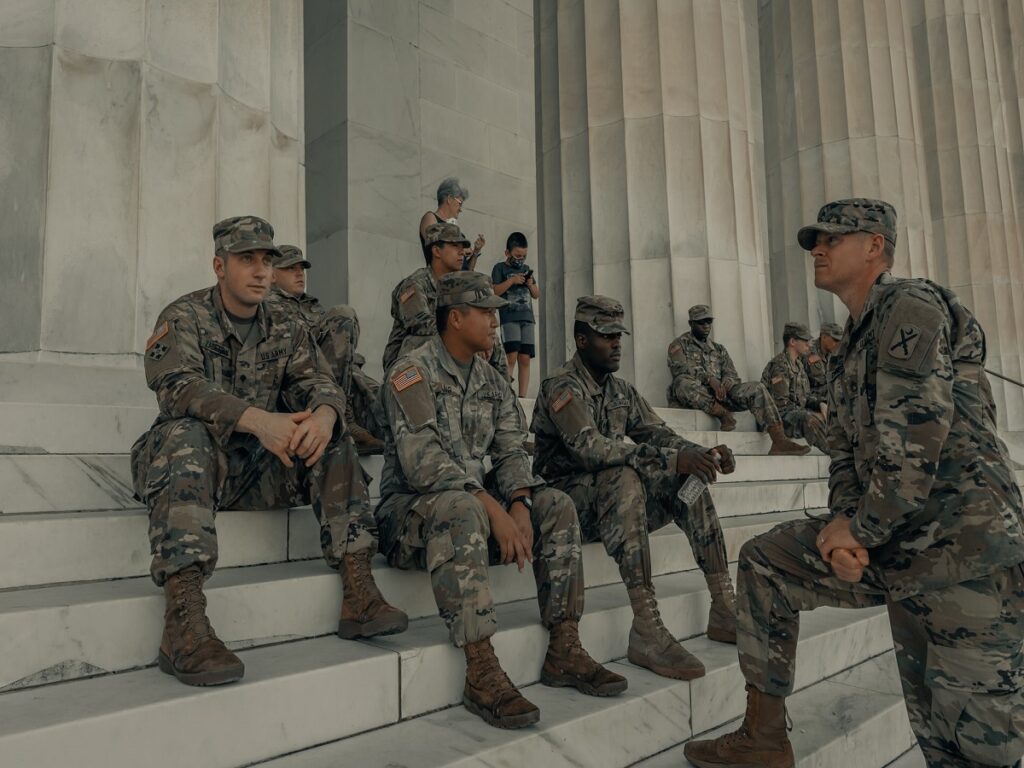
    Naturalization and U.S military service may be one of the easiest ways to acquire citizenship. It is the process of obtaining citizenship in a country for those who were not born there. This means that an individual who is not a citizen of the United States can become a citizen through naturalization.

    There are several benefits to naturalizing and becoming a citizen of the United States. These benefits include the right to vote, ability to apply for government jobs, and access to federal benefits and programs. Naturalized citizens also can sponsor family members for immigration and have greater protection under U.S. law. Additionally, naturalized citizens cannot be deported from the United States unless they engage in certain criminal activities or violate their citizenship status.

    Naturalization offers many important benefits that enhance the lives of individuals and their families. It also provides them with a sense of belonging and security in their new country.

    Overview of Naturalization and U.S. Military Service

    The naturalization process for military personnel is a specific program that allows current or former U.S. armed forces members to become United States citizens. This program offers a faster and easier path to citizenship for military personnel who have served and protected the country.

    Requirements for Naturalization Through the Military Service

    To be eligible for naturalization through military service, you must be a current or former member of the U.S. armed forces. You must also meet other eligibility requirements, such as being a permanent resident of the United States and having served in an active-duty capacity during a designated period of conflict. In addition, you must have served in the U.S. armed forces for at least one year. You must have served honorably, with no disciplinary actions or dishonorable discharges.

    Naturalization Process for Military Personnel

    To apply for naturalization through military service, you must complete and submit Form N-400, the Application for Naturalization. You must also provide supporting documents, such as your permanent resident card and discharge papers from the military. 

    There is a fee to file the naturalization application. After submitting your naturalization application, you will be scheduled for an interview with a USCIS officer. During the interview, you will be tested on your English and U.S. history and government knowledge. You must pass these tests to be eligible for naturalization through military service.

    Fast-track Naturalization for Military Personnel

    The naturalization process for military personnel is fast-track, and it typically takes less time to complete than the standard naturalization process. This is because the USCIS recognizes the sacrifices and service of military members. They also strive to provide them with the rights and benefits of citizenship as quickly as possible.

    Eligibility for Naturalization Through Military Service

    To be eligible for naturalization through military service, you must meet the qualifications for military personnel outlined below. You must have served in the U.S. armed forces for at least one year and received an honorable discharge from the military. If you have a discharge other than honorable, you may still be eligible for naturalization, but you must first seek a waiver from the USCIS.

    Naturalization through military service is a valuable opportunity for military personnel to gain citizenship in the United States. The process can be complex, but it is worth it for the rights and benefits of being a U.S. citizen. If you are a current or former military member, it is important to understand the requirements and steps involved in the naturalization process. They are as follows:

    • Military Personnel Qualifications:

    To be eligible for naturalization through military service, you must be a current or former member of the U.S. armed forces. You must also meet other eligibility requirements, such as being a permanent resident of the United States and having served in an active-duty capacity during a designated period of conflict.

    • Time Requirements for Military Service:

    To qualify for naturalization through military service, you must have served in the U.S. armed forces for at least one year. You must also have served honorably, with no disciplinary actions or dishonorable discharges.

    • Discharge Requirements for Military Service:

    To be eligible for naturalization through military service, you must have received an honorable discharge from the U.S. armed forces. If you have a discharge other than honorable, you may still be eligible for naturalization, but you must seek a waiver from the U.S. Citizenship and Immigration Services (USCIS).

    Naturalization and U.S. Military Service

    Application Process for Naturalization through Military Service

    To apply for naturalization through military service, you must follow the steps outlined below:

    1. Required Forms and Documents:

    The first step in the application process is to gather the required forms and documents. You will need to complete Form N-400, the Application for Naturalization, and provide supporting documents such as your permanent resident card, military discharge papers, and other relevant documents. Make sure to fill out the form accurately and completely and provide all required supporting documents.

    1. Application Fees:

    The next step is to pay the application fee, which is currently $725 and is subject to change. The fee must be paid through a money order, personal check, or credit card. You may be eligible for a fee waiver if you cannot afford the fee.

    1. Processing Time for Naturalization Applications:

    After submitting your naturalization application, the USCIS will review your application and schedule you for an interview. The processing time for naturalization applications varies, but the naturalization process for military personnel is typically faster than the standard naturalization process.

    1. Interview and Testing Requirements:

    During your interview with a USCIS officer, you will be tested on your knowledge of English, U.S. history, and government. You must pass these tests to be eligible for naturalization. The USCIS officer will also ask questions about your background and military service. Make sure to be prepared for the interview and to answer questions truthfully and accurately.

    The application process for naturalization through military service is straightforward, but it is important to follow the steps carefully and accurately. Gather all required forms and documents, pay the application fee, and prepare for the interview and testing requirements. If you have any questions or concerns, it is recommended to seek the help of a qualified immigration attorney or representative.

    Related: What Happens at an Immigration Interview?

    Importance of Naturalization through Military Service

    Naturalization through military service is an important and valuable path for military personnel to become U.S. citizens. Here are several reasons why:

    • Recognition of Service: Naturalization through military service is a way to recognize and honor the sacrifices that military personnel have made to defend the United States. By becoming U.S. citizens, military personnel show their commitment to the country they have served and their loyalty to the nation they call home.
    • Access to Benefits: U.S. citizenship brings several benefits, including the right to vote, travel with a U.S. passport, and eligibility for certain federal jobs. Naturalization through military service provides military personnel with access to these benefits, allowing them to fully participate in American society and enjoy the protections and freedoms of U.S. citizenship.
    • Protection in Times of Crisis: In times of war or other national emergencies, U.S. citizens are afforded greater protection and support than non-citizens. For military personnel, naturalization through military service ensures that they and their families are protected in times of crisis, both while serving and after they have retired.
    • Reunification with Family: Many military personnel have families who are not U.S. citizens. Naturalization through military service allows military personnel to sponsor their family members for U.S. citizenship, ensuring they can stay together in their home country.

    Naturalization through military service is an important and valuable path for military personnel to become U.S. citizens. It recognizes their sacrifices, provides access to important benefits, protects them in times of crisis, and reunites them with their families. For military personnel who wish to make the United States their permanent home, naturalization through military service is an important step towards full and active participation in American society.

    Summary – Naturalization and U.S. Military Service 

    Naturalization through military service is a valuable opportunity for military personnel to gain citizenship in the United States. The process can be complex, but it is worth it for the rights and benefits of being a U.S. citizen. If you are a current or former military member, it is important to understand the requirements and steps involved in the naturalization process.

    Do You Need to Talk to an Immigration Attorney About Getting Naturalization Through the U.S. Military Service? 

    Contact an experienced immigration attorney through us. Schedule a consultation by calling 914-481-8822. Our experienced attorney will answer your questions and provide the legal guidance required.

  • The U.S. Citizenship Test, Explained

    The U.S. Citizenship Test, Explained

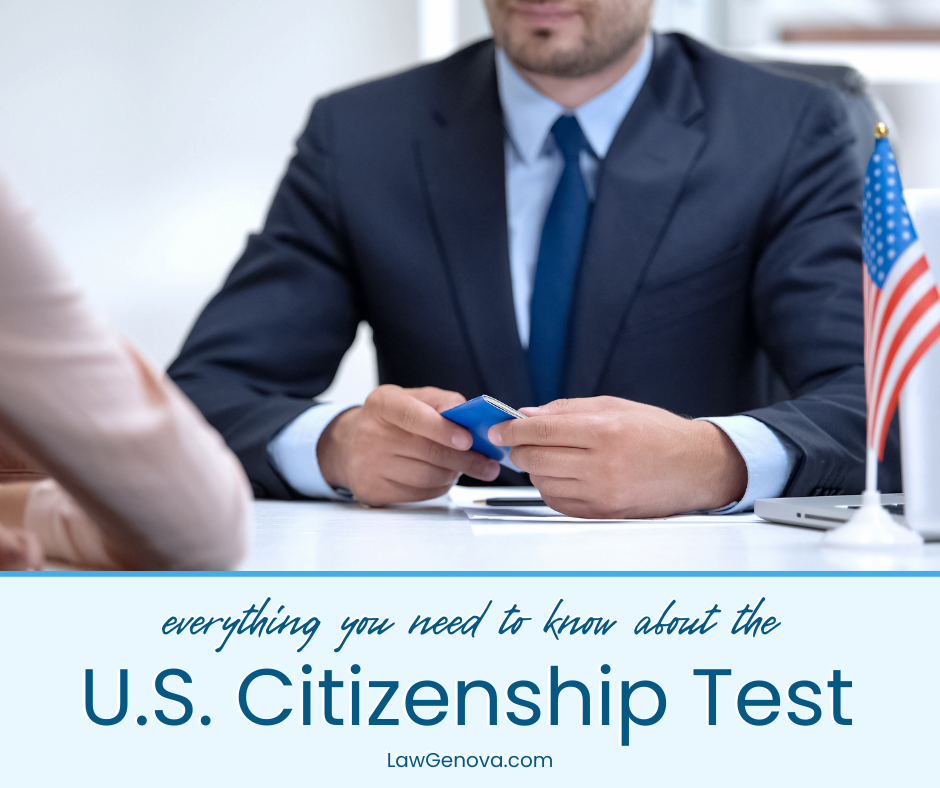
    If you’re like many people, you know that part of the naturalization process is taking the citizenship test. But what’s on the test, how hard is it, and what happens if you fail? This guide explains everything you need to know about the U.S. citizenship test (and what happens after you take it).

    The U.S. Citizenship Test, Explained

    Nearly everyone who wants to become a naturalized U.S. citizen must take the citizenship test. There are a few exceptions, but for the most part, you can expect to take the test during your naturalization interview.

    What is the U.S. Citizenship Test?

    Sometimes called the naturalization test, the U.S. citizenship test is a test that just about everyone who wants to become a United States citizen must take. The test covers your knowledge of civics and the English language, and it involves speaking, reading and writing.

    Though many people expect to sit at a desk, pull out a pencil and begin testing, that’s not exactly how this test works. Instead, it’s a built-in part of your naturalization interview.

    English

    The English part of the U.S. citizenship test involves:

    • Speaking. During your interview, the U.S. Citizenship and Immigration Services (USCIS) officer who interviews you will evaluate how well you speak and understand English.
    • Reading. The USCIS official interviewing you will ask you to read a sentence written in English. You must read one out of three sentences correctly to show the USCIS official that your English-reading skills are sufficient.
    • Writing. your USCIS official will ask you to write a sentence to show that you can write in English. You must write one of three sentences correctly.

    Note: If you read and write the first sentence correctly, you won’t have to read or write the other two.

    Civics

    The civics portion of the citizenship test covers a variety of questions on U.S. history and how the government works. You may also be asked questions about rights, responsibilities and other aspects of United States citizenship.

    Questions and Answers on the U.S. Citizenship Test - Naturalization Test Study Guide

    Questions and Answers on the Citizenship Test

    You don’t have to guess at what questions you’ll face during your immigration interview and citizenship test period in fact, USCIS has a complete list of the questions that an immigration officer may ask you on its website. (It provides the answers, too, which makes studying a lot easier!) You can access the list here, but here’s a sampling of some of the questions USCIS may ask you:

    • What is the supreme law of the land? (Answer: The Constitution.)
    • How many amendments does the Constitution have? (Answer: 27.)
    • Name one branch or part of the government. (Answer: Congress, President, the courts, the legislative branch, the executive branch or the judicial branch.)
    • What is the highest court in the United States? (Answer: The Supreme Court.)
    • What is the capital of your state? (The capital of New York is Albany, but your answer may vary based on where you live.)
    • Name one right only for United States citizens? (Answer: To vote in a federal election or to run for federal office.)
    • When was the Declaration of Independence adopted? (Answer: July 4, 1776.)

    The complete list of possible questions is available on USCIS’s website. You may print them and use them as a study guide. USCIS officials won’t ask you test questions that aren’t on that list. (But remember, you take the test as part of your naturalization interview. That means the USCIS officer conducting your interview will most likely ask you questions about your application. They may also ask you questions on other topics that aren’t part of the citizenship test.)

    How Many Questions Does USCIS Ask You?

    The USCIS official conducting your citizenship will ask you up to ten questions. You must get six of them right. Typically, as soon as you get six correct answers, the questions stop – there’s no need to keep asking, because you only need six to pass.

    It’s okay if the USCIS officer needs to ask you all ten questions. Don’t stress yourself out over it if that happens to you – you’re allowed to get four of the questions wrong.

    What Happens if You Fail the U.S. Citizenship Test?

    If you fail either part of the citizenship test – the English or civics portion – it’s not the end of the world. You can retake the failed portions. However, you can only fail the test twice. If you fail twice, USCIS will deny your naturalization application. That means you need to reapply for naturalization, starting at square one.

    Exemptions and Exceptions for the U.S. Citizenship Test - 50-20 and 55-15 Exceptions

    Exemptions and Exceptions for the U.S. Citizenship Test

    Though most people are required to take the citizenship test, some people are exempt. That means they don’t have to take the test (or a part of the test) at all. Other people have exceptions, such as being allowed to use an interpreter.

    English Language Exemptions

    You don’t have to take the English part of the citizenship test if:

    • You’re age 50 or older at the time you file your naturalization application and you’ve continuously lived in the U.S. with a green card for 20 years or more. This is sometimes called the 50/20 exception.
    • You’re age 55 or older at the time you file your naturalization application and you’ve continuously lived in the U.S. with a green card for 15 years or more. This is sometimes called the 55/15 exception.

    Even if you qualify for one of these exceptions, you still have to take the civics portion of the test. But if you’re not too confident in your English-language skills, it’s okay. You may take the test in your native language, provided that you bring an interpreter with you to your interview. Your interpreter must be fluent in your native language and in English.

    Note: If you’re age 65 or older at the time you file your application, and if you’ve been a green card-holder for at least 20 years, you get special consideration on the civics part of the test. You’re also allowed to bring a qualified interpreter with you to your interview. This is sometimes called the 65/20 exemption.

    Exceptions for Medical Disabilities

    If you can’t take the English or civics portion of the U.S. citizenship test because you have a medical disability, USCIS can give you an exception. Your doctor needs to fill out a specific form that explains why you can’t take the test. After your doctor completes the form, your attorney will file it with your naturalization application.

    Note: Only a licensed medical or osteopathic doctor, or a licensed clinical psychologist, can fill out the disability exception form.

    Accommodations for Disabilities

    The U.S. government requires USCIS to provide accommodations or modifications to people with disabilities. If you have a disability that makes it difficult for you to take one or both portions of the citizenship test (or to otherwise participate in the naturalization process), USCIS can make adjustments for you. You should discuss these issues with your attorney so that she can list them in the appropriate place on your naturalization application.

    Quick Reference Guide for Exemptions and Exceptions

    Exceptions or Exemptions English Civics
    Age 50 or older, if you have resided in the U.S. as a lawful permanent resident (green card-holder) for at least 20 years at the time you file your application You are exempt from this part of the test. You must pass this part of the test. However, you may take it in your language of choice using an interpreter.
    Age 55 or older, if you have resided in the U.S. as a lawful permanent resident (green card-holder) for at least 15 years at the time you file your application You are exempt from this part of the test. You must pass this part of the test. However, you may take it in your language of choice using an interpreter.
    Age 65 or older, if you have resided in the U.S. as a lawful permanent resident (green card-holder) for at least 20 years at the time you file your application You are exempt from this part of the test. You must pass this part of the test, but USCIS officers are authorized to administer specially designated test forms. You may take this part of the test in your language of choice using an interpreter.
    Medical disabilities You may be exempt from this part of the test, or USCIS may have to provide special accommodations so you can take it. You may be exempt from this part of the test, or USCIS may have to provide special accommodations so you can take it.

    Other Issues at Your Naturalization Interview

    The U.S. citizenship test is only part of your naturalization interview. The USCIS official conducting your interview will most likely talk to you about your application and ask you other questions that aren’t related to the test. Some of the questions may involve how attached you are to the principles and ideals in the U.S. Constitution, where you live and the answers you provided on your naturalization application.

    The naturalization interview is nearly your last stop on the path to citizenship. After you complete your interview and pass your citizenship test, USCIS will schedule your Oath of Allegiance. You must fill out Form N-445 before you show up to take the oath. This form contains questions about whether your circumstances have changed (such as whether you’ve been married or divorced, traveled outside the U.S., or been arrested).

    Most people take the Oath of Allegiance during a ceremony at the same USCIS field office where they interviewed. Before that ceremony takes place, USCIS will collect your green card; then, an official will review your answers on Form N-445. Then, you’ll take the Oath of Allegiance to the United States and receive your naturalization certificate. At that point, you’re officially a U.S. citizen, and you don’t have to take any more tests or file any more applications. You can simply start enjoying the new rights and responsibilities that come with U.S. citizenship.

    Do You Need to Talk to an Immigration Attorney About Citizenship?

    If you need to talk to an immigration attorney about getting naturalized citizenship in the United States, we may be able to help you. Call our office at 914-481-8822 to schedule a consultation with an experienced, knowledgeable immigration attorney who can answer your questions and give you the legal advice you need.